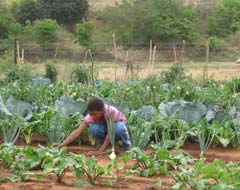
Gardening Methods
How to get good vegetable seeds?
There are different possibilities, for example using seeds from the community (well
adapted to the climate but could be weak and not disease-free), buy seeds (more
expensive), use the own garden seeds.
How, when and where to plant?
Large seeds can be planted directly in the soil. Small seeds require a seedbed or nursery
bed. Local advice with regard to the appropriate planting time should be sought, as the
climate of the region generally dictates the best time. The planting should also fit into
the school term. Should one or several crops be planted in each plot (intercroppingIntercropping (growing different crops near to one another) helps to utilize and conserve the soil and protect plants. A multi-layered garden, with plants at different heights, is a form of intercropping that makes the most of garden space and sunshine.)?
How do we look after the plants?
Regular tasks in the garden are wateringFor wet areas or wet seasons:
Dig holes and canals to drain water; add compost to drain clay soil; grow plants that love water (e.g. rice, taro, lotus, water chestnuts); protect young plants from heavy rain; grow plants on trellises and use containers; don't mulch too much
For dry areas or dry seasons:
Use “grey water” from washing; harvest rainwater with gutters and water tanks; grow crops near the water; prevent runoff - put beds across slopes and build up edges; use water conservatively - use a drip system, NOT a sprinkler; use a lot of compost and mulch; provide shade for young plants; remove competitive weeds that steal water; grow dry-climate crops (e.g. mung bean, egg-plant, sweet-potato, mango, groundnut, okra).
Methods of watering plants
• Flood the bed - in dry places make a sunken bed to keep the water in.
• Drip irrigation - use a drip hose or soaker hose.
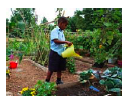
• Water by hand with a watering can or a plastic bottle with holes.
• Make water traps - e.g. keep the water in by digging a shallow trough round the plant.
• Water plants individually with sunken tins or upended bottles
Watering advice
• Water seeds and seedlings gently.
• Don’t drown plants by over-watering. If they need a lot of water, give it in stages.
• Water the soil, not the plants. Get the water to the roots. Water on leaves can hurt plants.
• Don’t use a sprinkler - it wastes water.
• Measure moisture each day with a measuring stick. When the top 3 cm is dry it’s time to water.
• Water in the morning or evening when it is cool so the water doesn’t evaporate.
• Deep roots don’t need more water: let plants dry out between waterings to encourage roots to grow, mulchingMulching means putting dry organic material (grass, straw, leaves) about 6 cm deep around the base of plants. The mulch keeps moisture in the soil, keeps the soil surface cool and soft, prevents weeds, and gradually decays like compost to enrich the soil. It is particularly useful where the soil is poor or there is very little water, in hot climates and hot seasons. The best mulching material is light-coloured and reflects the light. Use grass and weeds before they produce seeds, otherwise you will be providing competition instead of reducing it! and weedingYou must catch weeds before they seed and make sure you get the roots out or cut offthe weed below the surface of the soil. Some weed attract beneficial insects, others make a good contribution to the compost heap.
How to keep the soil rich?
Growing plants takes nutrients out of the soil. There are several good ways of keeping
the soil rich: compostingCompost, “brown gold”, is the magic ingredient of good gardening. It provides nutrients to make soil rich and fertile, and keeps it moist and airy by opening up the soil, and trapping and draining water.
Compost ingredients: Most organic materials can go into compost: straw, cut grass, organic waste from the kitchen, weeds, plants, leaves, animal manure, wood ash, animal and fish bones, feathers, cotton cloth, bits of leather or paper, soil. Do not use cooked food, large pieces of wood, plastic, metal, glass, crockery, wire, nylon, synthetic fabrics, coal ash, seeding grass or very tough weeds.
Compost containers: Compost can be made in a bin with a roof for shelter. Having three bins is best: one to make it in, one to move it to, and one to store it. It can also be made in a pit, in a large cardboard box or in a large strong plastic bag with air holes. The important thing is keep it “cooking” by keeping it damp and giving it air.
Making compost: Start with a layer of sticks for drainage, then follow with layers of grass, leaves, manure, soil. Mix wet and dry, and alternate brown and green. Chop up big leaves. Add a final layer of soil, make a hole in the middle to let air in, water the heap and cover with grass or with a cloth to keep it damp. After about five days the heap will heat up as bacteria work to break it down. Keep the compost damp. After about six weeks turn the compost - take it out and put it back, or move it to the next bin, always keeping it damp. Turn it again every few weeks. After three months test it. If it is dark, crumbly, light and moist, it is ready to use.
Using compost: Use compost as soon as it is ready. Spread it before planting and when potting, and put it around growing plants every two weeks. Don’t let it dry out: use it in the early evening, when it is cool, and cover with mulch to keep it damp. and mulchingMulching means putting dry organic material (grass, straw, leaves) about 6 cm deep around the base of plants. The mulch keeps moisture in the soil, keeps the soil surface cool and soft, prevents weeds, and gradually decays like compost to enrich the soil. It is particularly useful where the soil is poor or there is very little water, in hot climates and hot seasons. The best mulching material is light-coloured and reflects the light. Use grass and weeds before they produce seeds, otherwise you will be providing competition instead of reducing it!, minimum tillageAdd compost, mulch but never dig again, crop rotationIf you plan to grow the same crops regularly, you will need to rotate them. Each kind of crop needs particular nutrients in the soil and uses these up at a particular level in the ground. At the same time, each kind of plant attracts its own particular pests and diseases, which soon become established around the crop. If you grow the same kind of crop in the same place season after season, the nutrients that the plant needs are quickly exhausted, the plants grow weak and stunted and quickly come under attack from waiting pests and diseases., multi-layer
croppingGrowing plants of different heights and habits together.
How to use the tools?
What precautions should you take and what practices should be established to use tools
without risks, what rules should be established about keeping tools free of rust, sharing
them responsibly and, above all, putting them away after use.
How to fight pests and diseases?
With "integrated pest management": Healthy plantsIntegrated pest management employs a range of natural methods to reduce and control pests and diseases. Ensuring that plants are healthy is the first strategy. Plants should be monitored regularly and treated immediately. The checklist below covers the main points to be checked
1. Growth: Have the plants grown? What stage are they at? Any fruit/seeds?
2. Health:Are they looking well? Are there signs of pests or diseases? Are any plants wilting or stunted? Are there fallen leaves, eaten leaves, yellow leaves, fungus?
3. Garden creatures: What insects/worms/animals are around? Are there plenty of beneficial creatures (e.g. lacewing, ladybug, frogs, lizards)?
4. Soil/water: Is the soil dry? Which plants or beds need water? Is anything too wet?
5. Mulching: Is everything well mulched? Where do we need more mulch?
6. Protection: How good is our protection against predators (e.g. fences, walls, scarecrows)?
7. Wind and sun: Is anything getting too much wind, sun or shade?
8. Space: Is anything overcrowded? Does anything need thinning/transplanting?
9. Weeds: Are there a lot of weeds near the plants?
10. Support: Does anything need training up, tying up, spreading out?
11. Hygiene: What needs tidying up? Burning? Cutting back? Cutting down?
12. Compost: How good are our supplies of compost and mulch?
, Crop rotationIf you plan to grow the same crops regularly, you will need to rotate them. Each kind of crop needs particular nutrients in the soil and uses these up at a particular level in the ground. At the same time, each kind of plant attracts its own particular pests and diseases, which soon become established around the crop. If you grow the same kind of crop in the same place season after season, the nutrients that the plant needs are quickly exhausted, the plants grow weak and stunted and quickly come under attack from waiting pests and diseases.,
Companion plantingPlanting particular plants together can attract good insects and drive away pests. In general, mixed crops and strong smells repel garden enemies, while flowers attract beneficial insects. ‘Companion planting’ is a natural way to protect plants., Attitudes to insectsSome insects are good for plants and some are harmful. Butterflies and bees for example should be encouraged as they pollinate the plants; mantises and ladybugs prey on harmful insects..


